Yes. With a regular external sealer, freeze the liquid first (in a container or an open bag) and seal the frozen block. A chamber sealer can seal liquids directly. Either way, cool liquids quickly and keep sealed soups and sauces frozen or refrigerated.
Why liquids are tricky for external sealers
An external sealer pulls air out through the bag opening. Liquid follows the air toward the machine, which ruins the seal (you can’t heat-seal through liquid) and can get into the drip tray or pump. That’s why manufacturers recommend pre-freezing.
Method 1: Pre-freeze, then seal (external sealers)
- Cool the liquid quickly. Divide hot soup or stock into shallow containers and refrigerate; don’t leave it out for more than 2 hours.
- Freeze in portions. Use silicone portion trays, a rectangular container or an open vacuum bag standing upright in a container. Freeze until completely solid.
- Pop out the block (or keep it in its bag), place it in a vacuum bag with plenty of headspace and wipe the bag mouth dry.
- Vacuum and seal promptly, before the surface starts to thaw. Use the double-seal setting if available.
- Label, date and return to the freezer. Soups and stews keep best quality for 2–3 months at 0°F (FoodSafety.gov).
Freezing soups in flat, brick-shaped portions makes them stack like books in the freezer and thaw much faster.
Method 2: Use pulse and moist mode (small amounts of moisture)
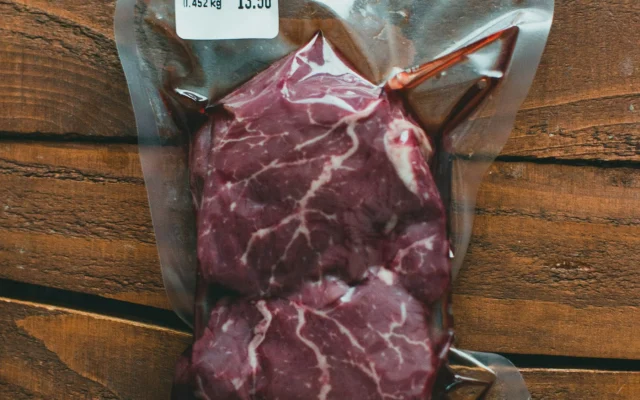
For foods that are wet but not swimming in liquid — juicy steaks, a light marinade — hang the bag over the edge of the counter so liquid stays at the bottom, use moist mode, and pulse the vacuum, sealing as soon as the liquid starts creeping upward. A folded paper towel just below the seal area can catch small amounts of moisture.
Method 3: Chamber vacuum sealer
A chamber sealer removes air from the whole chamber, so liquid stays in the bag. You can seal soups, stocks, brines and marinated meat without freezing first. Keep the bag upright (a support inside the chamber helps) and don’t overfill. Very warm liquids can boil under vacuum — cool them first.
VacMaster VP215 Chamber Vacuum Sealer
A long-running commercial-style chamber machine with an oil rotary pump and removable 10 in seal bar — it seals soups, marinades and liquids that suction sealers can't.
- Sealer typeChamber
- Vacuum settingsAdjustable vacuum & seal time
- Seal bar10 in removable
- Built-in bag storageNo
- Bag cutterNo
- Accessory portNo
- Warranty1-year limited
- Seals liquids and marinades in the bag
- Oil rotary pump for deep, consistent vacuum
- Removable seal bar with double seal wire
- Uses smooth chamber pouches
- About 84 lb — needs a permanent spot
- Oil pump needs periodic maintenance
- Maximum bag size about 10 × 13 in
Affiliate link. Prices and availability change — check Amazon for current details.
Lighter alternative: the dry-pump Avid Armor USV32. Compare both in our chamber vs external guide.
Marinating with a vacuum sealer
Many sealers have a marinate function or canister option that uses repeated vacuum cycles in a container. For bags, the easiest route with an external sealer is to freeze the meat in its marinade in a container, then vacuum seal the solid block. It will marinate as it thaws in the fridge.
Safety reminders
- Vacuum-sealed soups, sauces and stocks are perishable — keep them refrigerated (use within 3–4 days) or frozen.
- Vacuum sealing is not a substitute for pressure canning; never store vacuum-sealed liquids at room temperature.
- Thaw in the refrigerator, in cold water (changing it every 30 minutes) or in the microwave, then reheat soups to a rolling boil.
Frequently asked questions
Can you vacuum seal soup without freezing it?
Only with a chamber vacuum sealer. With an external sealer, freeze the soup first and seal the frozen block.
Can you vacuum seal wine or oil?
Bottled wine is usually kept with a vacuum wine stopper rather than a bag. Oils don’t need vacuum sealing in bags; keep them in their bottles in a cool, dark place.
What happens if liquid gets into my vacuum sealer?
Unplug it, empty and wash the drip tray, wipe the channel and gaskets and let everything dry completely. See our troubleshooting guide if suction drops afterwards.
Affiliate disclosure: As an Amazon Associate, we earn from qualifying purchases. This does not affect our editorial opinions or recommendations. Learn more.