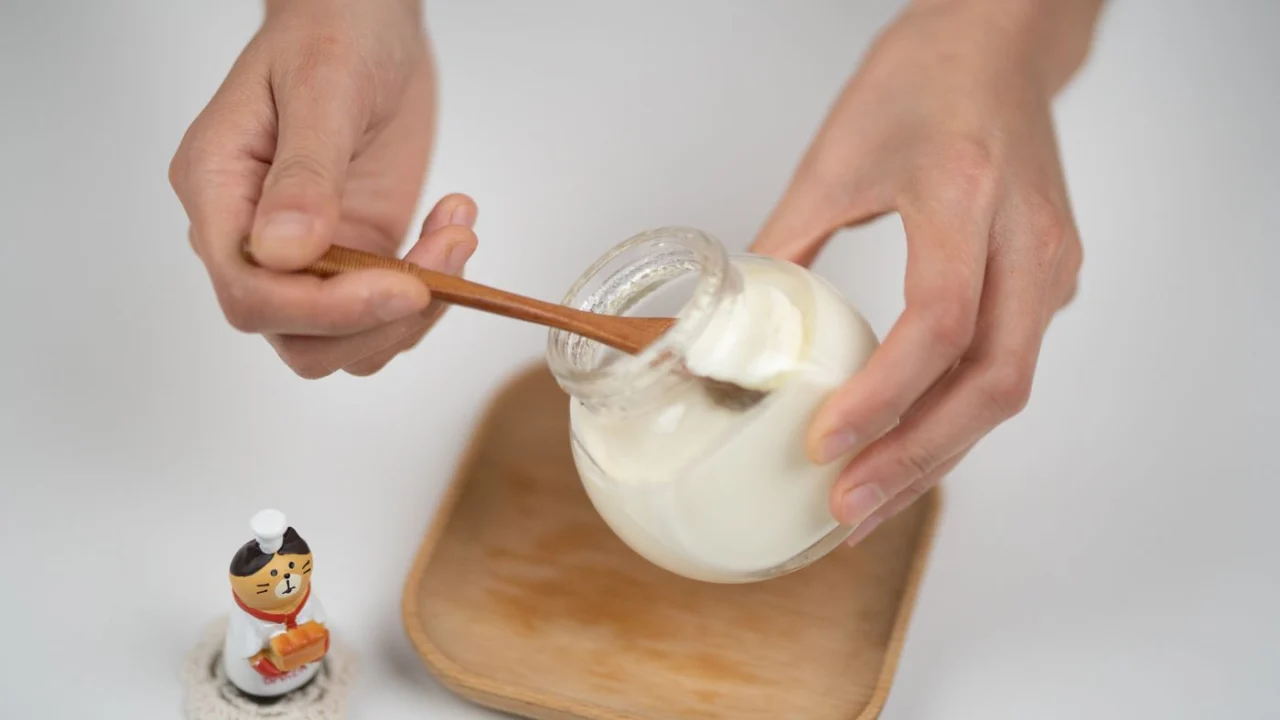
Yogurt needs one thing above all: a steady warm temperature for many hours. That’s exactly what a sous vide circulator does best. All you need is milk, a little live-culture yogurt as a starter, and some clean jars.
Heat milk to 180°F (82°C), cool it to below 110°F (43°C), stir in about 1 tablespoon of plain live-culture yogurt per cup of milk, pour into jars and incubate in a 110°F (43°C) water bath for 8–12 hours. Chill before eating.
Recipe card
Sous Vide Yogurt
Ingredients
- 4 cups (1 litre) whole or 2% milk
- ¼ cup (60 g) plain yogurt with live and active cultures (as a starter)
- Clean glass jars with lids (pint or half-pint jars work well)
Method
- Preheat your sous vide water bath to 110°F (43°C).
- Heat the milk slowly in a heavy saucepan to 180°F (82°C), stirring and scraping the bottom so it doesn’t scorch. This changes the milk proteins and gives thicker yogurt.
- Cool the milk to 105–110°F (40–43°C) — an ice-water bath speeds this up.
- Whisk a little of the warm milk into the starter yogurt, then whisk this back into the rest of the milk.
- Pour into clean jars, leaving a little headspace, and close the lids fingertip tight.
- Submerge the jars in the water bath and incubate for 8–12 hours. Longer incubation gives a tangier, thicker yogurt.
- Remove the jars, tighten the lids and refrigerate for at least 4 hours to set fully.
Notes
- For Greek-style yogurt, strain the chilled yogurt through a cheesecloth-lined sieve for a few hours.
- Save a few spoonfuls as the starter for your next batch.
Troubleshooting
- Runny yogurt: incubate longer, use whole milk, or make sure the milk reached 180°F first.
- Didn’t set at all: the starter may not have contained live cultures, or the milk was too hot when you added it.
- Too sour: shorten the incubation time.
If the yogurt smells unpleasant, shows pink, orange or fuzzy mould, or separates into slimy layers, throw it out and start again with fresh starter and very clean jars.
How long does homemade yogurt last?
Keep it refrigerated and eat it within about 1–2 weeks. A jar attachment for your vacuum sealer’s accessory port can remove air from the headspace to help keep flavour fresh — but refrigeration is still essential.
Frequently asked questions
Can I use a probiotic capsule as a starter?
Some people do, but results vary because capsules contain different strains in different amounts. Plain store-bought yogurt that lists live and active cultures is the most reliable starter.
Can I make yogurt in vacuum bags instead of jars?
Jars are easier and safer to fill with liquid milk. Sealing liquid milk in a bag requires a chamber sealer.